
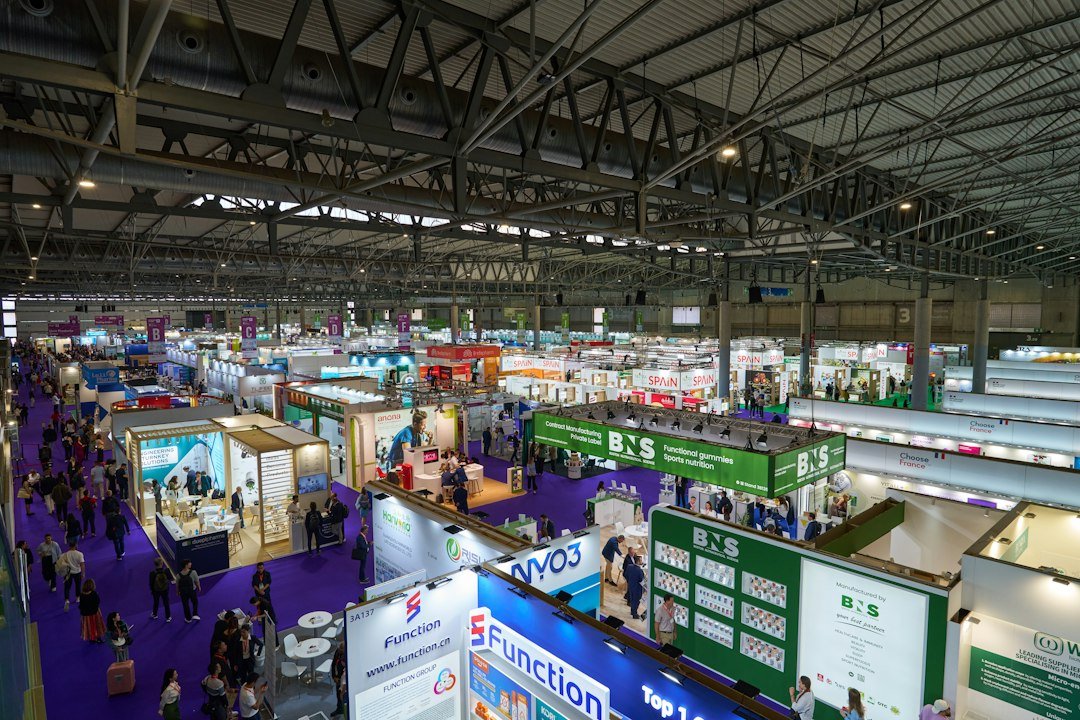
Photo by <a href='https://unsplash.com/@shipduck?utm_source=wpvibe&utm_medium=referral'>Jin-Woo Lee</a> on <a href='https://unsplash.com'>Unsplash</a>
The fastest way to get exhibitors for a trade show is to treat exhibit space as access to an audience, not as square footage. Companies do not buy a 10×10 for the carpet. They buy a chance to meet a specific group of buyers, and they renew only when that meeting pays off.
The research is consistent on this point. In a CEIR fact sheet on the decision to exhibit, 84 percent of executives cited attendance quality as a deciding factor, ahead of ROI and past performance. Freeman’s 2024 exhibitor research found that 93 percent of exhibitors rank the quality of expected attendees as the most impactful outcome.
This guide is written for show organizers and event sales teams. It walks through eleven steps in the order the work actually happens: defining the right exhibitors, proving the audience, pricing and packaging space, building prospect lists, running outreach, and rebooking. For more on running an event from the organizer side, see the Tradeshows.FYI hosting resources.
1. Define the Right Exhibitors for a Trade Show Before You Prospect
Why it matters: Attendees come to see products and services they intend to buy. If the exhibit floor does not match those needs, attendance suffers, and exhibitors leave. A UFI blog on retention recommends asking attendees which product categories they want to see and buy from, then recruiting exhibitors that match.
How to do it: List the product and service categories your attendees purchase. Map each category to the types of companies that sell it. Then write a short buyer persona for each exhibitor type, as Map Your Show recommends for exhibitor targeting: company size, goals, typical budget, and who signs the contract.
| Exhibitor segment | What they usually want | Typical space need |
|---|---|---|
| Category leaders | Brand presence, customer meetings, product launches | Island or peninsula, sponsorship |
| Established mid-size suppliers | Qualified leads and new accounts | Inline or corner booths |
| Startups and new entrants | First customers at a controlled cost | 10×10 or a first-time pavilion |
| Distributors and service providers | Partners, dealers, referral relationships | Inline booths |
| Nonprofits and associations | Awareness and membership | Reduced-rate booth or tabletop |
Caveat: It is tempting to sell space to any company willing to pay. Off-target exhibitors dilute the attendee experience and rarely renew, which makes next year’s sales job harder.
2. Prove Attendee Quality With Data Exhibitors Trust
Why it matters: In CEIR’s Q4 2024 Index, the number of exhibitors was only 0.1 percent behind 2019, while attendance was 12.9 percent behind, the slowest metric to recover. That gap puts more pressure on organizers to show who is actually in the hall. As leaders of the Consumer Technology Association wrote in Trade Show Executive, “It’s no longer enough for marketing leaders to tout ‘strong attendance'”.
What to Put in an Attendee Profile
Exhibitors evaluate shows with a fairly predictable checklist. The Tradeshows.FYI guide on how exhibitors find the right trade shows scores events on audience fit, qualified prospects, total cost, reputation, and probability of measurable ROI. Build your attendee profile to answer those questions directly:
- Job titles and seniority levels
- Purchasing authority or buying role
- Industries and company sizes represented
- Geographic reach
- First-time versus returning attendees
- Top reasons attendees give for coming
Collect these fields through registration questions, and report them consistently every year so exhibitors can see trends.
When an Independent Audit Is Worth It
An independent audit verifies attendance using a defined method. CES, for example, follows UFI guidelines covering registration, data cleanup, and reporting, and keeps its official count pending until the audit is complete. The same article recalls that IBM withdrew from COMDEX in 1997 over unverified attendance and attendee-profile claims.
Caveat: Audits take time and money, and a first-year or small show may not be ready for one. At minimum, publish your counting method: separate unique attendees from total registrations and exclude exhibitor staff. A smaller honest number sells better over time than an inflated one.
3. Price Booth Space and Build Packages
Why it matters: Price is one of the few exhibitor pain points an organizer fully controls. CEIR’s CEO lists the cost of booths and sponsorships among the issues organizers can influence, alongside factors they cannot, such as inflation and travel costs. Freeman found that 61 percent of exhibitors say unpredictable costs strongly affect how they exhibit, and that exhibitors want predictable, tiered, all-inclusive packages.
Space revenue = net square feet sold × rate per square foot + corner and premium fees
A Real Rate Card Example
The 2026 ASHA Convention rate card shows a common structure: early-bird and standard rates, a corner premium, island space priced per square foot, and a separate nonprofit rate.
| 1, 2026) | ||
|---|---|---|
| Commercial inline 10×10 | $2,450 | $2,650 |
| Commercial corner 10×10 | $2,700 | $2,900 |
| Commercial island | $27 per sq. ft. | |
| $29 per sq. ft. | ||
Booth Types and Packages
Offer a range of sizes so trade show exhibitors with different budgets can find a fit. Map Your Show describes island booths as open on all four sides and peninsulas as open on three, with peninsulas drawing more traffic than standard inline booths. For prospects new to the format, link to a plain-language explainer of trade show booth sizes and a breakdown of what it costs to exhibit at a trade show, so they can budget beyond the space fee.
Caveat: Bundled packages raise the headline price. Offer both bare space and a package so price-sensitive buyers can compare, and make sure every package item is something your contractors can actually deliver.

4. Build Sponsorship Tiers That Reward Commitment
Why it matters: Sponsorship adds revenue and gives larger trade show exhibitors more ways to stand out. IAEE’s summary of CEIR benchmarking notes that organizers who neglect sponsorship strategy or tiered pricing miss revenue.
How to do it: Neuroscience 2026 publishes a clear ladder: Platinum at $45,000, Gold at $25,000, Silver at $15,000, and Bronze at $7,500. Each tier adds registrations, ad placements, and priority points toward future exhibit space, from five points at Platinum down to one at Bronze. Tying sponsorship to space-selection priority gives sponsors a reason to renew.
- Digital: category spotlights, enhanced directory listings, app and email sponsorships
- Onsite: signage, Wi-Fi, charging stations, floor decals, lounges, badges and lanyards
- Content: sponsored sessions or exhibitor showcases
The digital and onsite examples come from Map Your Show’s list of sponsorship opportunities.
Caveat: Too many tiers confuse buyers. Keep three or four, list exact deliverables for each, and never sell visibility the venue or schedule cannot support.
5. Write an Exhibitor Prospectus That Answers Every Question
Why it matters: The prospectus is the document prospective trade show exhibitors forward to the person who approves the budget. If it leaves out prices, deadlines, or audience data, the deal stalls. Fairoo’s guide on exhibitor acquisition recommends publishing transparent prices, packages, and booth spaces online and removing hurdles from booking.
What to include:
- Dates, venue, hours, and move-in and move-out windows
- Attendee profile and counting method
- Past exhibitor list
- Floor plan with sold and available space
- Rate card, early-bird deadline, and payment and cancellation terms
- Packages and sponsorship menu
- Marketing support for exhibitors (directory listing, guest passes, graphics)
- One named sales contact
Caveat: A prospectus becomes a reference point for contract disputes. Date every version, keep claims verifiable, and update it when prices or the floor plan change.
6. Build a Prospect List of Trade Show Exhibitors
Why it matters: Most new exhibitors already exhibit somewhere, belong to a related association, or sell to your attendees. A structured list keeps the sales team focused on likely buyers rather than cold volume.
| Prospect source | Why they are likely buyers |
|---|---|
| Past and lapsed exhibitors | They know the show; find out why they left |
| Exhibitors at competing or adjacent shows | They already budget for trade shows in your market |
| Association members | Association leaders can make introductions, as Cadmium suggests |
| Suppliers to your attendees | Attendees can name the vendors they buy from |
| Referrals from current exhibitors | Warm introductions; Cadmium suggests referral incentives |
| Inbound inquiries and directory listings | They are already researching your show |
Exhibitor Prospect Scoring Table
Score each prospect from 1 (weak) to 5 (strong) on the factors below. Call the highest totals first.
| Factor | What a 5 looks like |
|---|---|
| Category fit | Sells exactly what attendees say they want to buy |
| Exhibiting history | Exhibits at two or more related shows |
| Budget signal | Takes larger booths or sponsors elsewhere |
| Relationship | Warm contact or referral |
| Timing | Launching a product or entering your market |
| Decision access | You know who signs the contract |
A simple rule: 24 to 30 points gets a call this week, 15 to 23 enters the email sequence, and anything lower goes to a nurture list.
Caveat: Respect privacy and email laws when you collect contacts from public exhibitor lists, and never imply a relationship with another show that does not exist.
7. Run a Multi-Touch Outreach Sequence
Why it matters: Exhibit-space decisions involve budgets, approvals, and calendars. One email rarely closes a booth. Fairoo recommends tracking each prospect’s status in a CRM and running consistent follow-ups. Map Your Show advises personalized emails that are short and clear even when skimmed.
| Touch | Channel | Content |
|---|---|---|
| 1 | Short note on attendee fit, with the attendee profile attached | |
| 2 | Phone or LinkedIn | Ask about their show calendar and goals |
| 3 | Floor plan with available locations and the early-bird deadline | |
| 4 | Virtual info session | Group walkthrough of the show, recorded for later viewing |
| 5 | Deadline reminder and a direct booking link | |
| 6 | Final email | Polite close-out; offer to revisit next year |
The recorded virtual info session comes from Cadmium’s exhibitor recruitment guide. It lets one presentation reach many prospects at once.
Caveat: A sequence is not permission to send endlessly. Stop at the end, honor opt-outs, and log the reasons prospects give for declining. Those reasons are product feedback.
8. Use Early-Bird Deadlines and Floor Plan Scarcity
Why it matters: Deadlines give buyers a reason to act now instead of later. ASHA’s early-bird rate, for example, is $200 lower than standard on a commercial 10×10 and expires on a fixed date. Map Your Show recommends showing remaining inventory and using time-limited offers and a live floor plan to create urgency.
Exhibit Sales Timeline
| Phase | Sales focus | Pricing |
|---|---|---|
| During the current show | Onsite rebooking of returning exhibitors | Best rate plus priority selection |
| Right after the show | Send results; follow up with exhibitors who did not rebook | Rebooking rate held briefly |
| Early-bird window | Lapsed exhibitors and top-scored new prospects | Early-bird rate |
| Standard period | Full outreach sequence; sponsorship upsells | Standard rate |
| Final months | Fill remaining space; first-time packages; self-selection | Standard rate, packaged |
Caveat: Deep or repeated last-minute discounts teach exhibitors to wait. Enforce deadlines, and reward early buyers with location choice rather than ever-larger price cuts.
9. Launch a First-Time Exhibitor Program
Why it matters: New exhibitors are the hardest to keep. A UFI blog post cites a U.S. average renewal rate of 76 percent, but only 39 percent for new exhibitors. The reasons given include poor fit, arriving without a plan or pre-show marketing, and slow booth traffic. As consultant Jefferson Davis put it in that post, “We don’t teach exhibiting at university!”
How to do it: Real programs for first-time trade show exhibitors offer useful models.
- RSNA 2026: orientation webinars, monthly virtual meetups, and contractor discounts of 5 percent, or 10 percent inside the First-Time Exhibitor Pavilion
- NBAA (2018 program): a central pavilion for 10×10 and 10×20 spaces, badge ribbons, a highlighted show-guide listing, and a meet-the-team reception
- ASHA 2026: a one-time $800 member booth for eligible first-time exhibitors
Many first-timers also need help with the booth itself. A short resource list in the welcome kit can cover graphics deadlines, shipping, and equipment such as portable display options sized for a 10×10.
Caveat: Heavy discounts can attract companies that were never a fit. Screen for category fit, set a clear path to standard pricing, and never place the pavilion in a low-traffic corner of the hall.
10. Make Exhibiting Easy After the Contract Is Signed
Why it matters: Exhibitors who find the process frustrating are less likely to return. A TSNN article by exhibitor-platform CEO Adam Jones describes how exhibitors re-enter the same information and dig through 100-page documents, and suggests asking how hard exhibiting was in post-show surveys. PCMA reports that exhibitors want organizers to offer packages and simplify logistics.
How to do it:
- Publish one consolidated deadline calendar in the exhibitor manual (see the Tradeshows.FYI guide to trade show logistics and the exhibitor services manual)
- Collect company details once and reuse them across the directory, badges, and invoices
- Host a pre-show webinar and send a checklist, as Map Your Show suggests
- Provide a promotion kit: logos, guest passes, and booth-location graphics
- Offer pre-show meeting scheduling; PCMA cites Freeman data that 68 percent of attendees want to connect in advance
Caveat: Organizers cannot control every contractor rate or venue rule. They can control clarity: one manual, one calendar, and one point of contact.
11. Rebook Trade Show Exhibitors Onsite
Why it matters: The cheapest exhibitor to sign is the one already on the floor. Naylor’s show-management team suggests aiming to sell 60 to 80 percent of next year’s floor during the current show. IPM ESSEN reported that more than 60 percent of exhibitors had rebooked for 2026 during the 2025 event.
Onsite Rebooking Checklist
- Start preparing 8 to 10 weeks before the show: new rates, collateral, and next year’s floor plan
- Plan for each rep to handle roughly 10 to 15 exhibitors per show day, per the same Map Your Show guidance
- Assign appointments by priority points based on at least three years of exhibiting history, as Naylor recommends
- Offer a modest onsite incentive; Naylor’s example is $1.00 off per square foot, with a deposit of about 50 percent due within 30 days
- Consider a 14-day cooling-off period so exhibitors can commit with confidence
- Keep a visible, staffed rebooking area and a live floor plan
Caveat: Key decision makers are often not at the booth, as Map Your Show notes. Start renewal conversations before the show, and keep the onsite tone low-pressure.
What Makes Exhibitors Come Back
Across every source above, the same five drivers keep trade show exhibitors returning: the right audience, measurable leads, predictable costs, an easy process, and an ongoing relationship. Lead results are the weakest link. Freeman found that only 49 percent of exhibitors are extremely or very satisfied with lead acquisition.
Could this exhibitor prove to their own management that the show paid off?
If the answer is uncertain, help them. Send booth traffic, directory views, and lead counts quickly after the show; Fairoo suggests getting key figures to exhibitors within 48 hours. Map Your Show lists directory views, profile clicks, collateral views, and leads as useful exhibitor metrics. The UFI blog also recommends staying in touch after the sale, not only sending mass emails about rules and paid upgrades.
Track Sales and Improve Next Year
Top-performing exhibitions measure exhibitor satisfaction and retention and use retention data to forecast floor-space sales. Yet CEIR’s 2025 benchmark coverage reports that only 25 percent of organizers track exhibitor satisfaction.
Exhibitor retention rate = returning exhibitors ÷ last year’s exhibitors × 100
| Metric | Why it matters |
|---|---|
| Net square feet sold | Core space revenue and floor growth |
| Number of exhibiting companies | Breadth of the floor for attendees |
| Retention rate, overall and first-time | Shows whether the event delivers value |
| Onsite rebooking percentage | Early signal of next year’s revenue |
| Exhibitor satisfaction and ease score | Finds problems before exhibitors leave |
| Reasons for non-renewal | Turns churn into a fix list |
CEIR’s Event Performance Analyzer uses four inputs: net square feet sold, number of exhibiting companies, attendees, and gross revenue. Tracking the same four every year makes benchmarking possible, and it makes the job of finding exhibitors for a trade show easier each cycle because the results are documented.
Caveat: Satisfaction surveys miss the exhibitors most likely to leave, because they often do not respond. Pair surveys with direct calls to your largest and newest accounts.
List Your Show Where Exhibitors Look
Exhibitors research shows the same way attendees do: by industry, location, and date. Make sure your event appears where they search. You can list your show on Trade Show Event Directory so prospective exhibitors can find dates, venue, and contact details, and browse the trade show directory to see which events compete for the same exhibitors.
Getting Exhibitors for a Trade Show: FAQ
How do you get exhibitors for a trade show?
Define which companies sell what your attendees buy, prove attendee quality with data, publish clear pricing and packages, build a scored prospect list, run a multi-touch outreach sequence, and rebook current exhibitors onsite.
How do you find exhibitors for a new event?
The best new exhibitors for a trade show usually come from competing or adjacent shows, members of related associations, and suppliers your target attendees already buy from. A first-time exhibitor package and a recorded info session help reduce risk for early buyers.
How far in advance should you sell exhibit space?
Selling for next year should begin during the current show through onsite rebooking. New-prospect outreach then runs through the early-bird window and standard rate period until the floor is full.
How much should you charge for a trade show booth?
Benchmark against similar shows in your industry. A common structure is a per-booth or per-square-foot rate with an early-bird discount, a corner premium, and a reduced nonprofit rate.
What is an exhibitor prospectus?
An exhibitor prospectus is the sales document for exhibit space. It covers dates, venue, attendee profile, floor plan, rates, deadlines, packages, sponsorships, and policies.
How do you keep exhibitors coming back?
Deliver the promised audience, send lead and traffic results quickly, keep costs predictable, simplify logistics, support first-time exhibitors, and track retention and satisfaction every year.
What is onsite rebooking?
Onsite rebooking is selling next year’s booth space to exhibitors during the current show, usually with priority location selection and a time-limited incentive.
Sources
- Exhibit City News: CEIR Releases Fourth Fact Sheet About the Decision to Exhibit (2011)
- Event Marketer: Five Takeaways from Freeman’s 2024 Exhibitor Trends Report
- TSNN: 5 Takeaways from CEIR’s Q4 2024 Index (2025)
- Trade Show Executive: Why Independent Audits Matter for the Events Industry (2024)
- IAEE: Making Data-Driven Decisions to Develop Strategies (2024)
- IAEE: What Separates Winning Exhibitions from the Rest? (2025)
- Exhibit City News: CEIR Releases 2025 Benchmark Reports
- ASHA Convention 2026: Booth Types and Pricing
- Society for Neuroscience: Neuroscience 2026 Tiered Sponsorships
- RSNA: First-Time RSNA Exhibitors
- NBAA: First-Time Exhibitors (2018)
- UFI: Exhibitor Retention, Are You Doing All That You Can? (2019)
- TSNN: Why Are We Making Exhibiting So Hard? (2025)
- PCMA: 5 Data Points to Attract and Retain Exhibitors and Attendees (2024)
- Naylor Association Adviser: Are On-Site Event Exhibit Renewals Worth Your Time?
- Map Your Show: Rebooking and Booth Sales Strategies that Drive Results (2025)
- Map Your Show: 5 Easy Tips to Increase Exhibitors for Your Next Trade Show (2023)
- BizBash: How to Attract and Keep Exhibitors for Your Trade Show
- Cadmium: How Do I Get More Exhibitors for My Event? (2025)
- Fairoo: 4 Strategies to Attract Exhibitors (2026)
- Fairoo: Exhibitor Rebooking Guide (2026)
- IPM ESSEN: Rebooking for IPM ESSEN 2026 Exceeds 60 Percent
About the Author




1 thought on “How to Get Exhibitors for a Trade Show: 11 Proven Steps”
Comments are closed.