

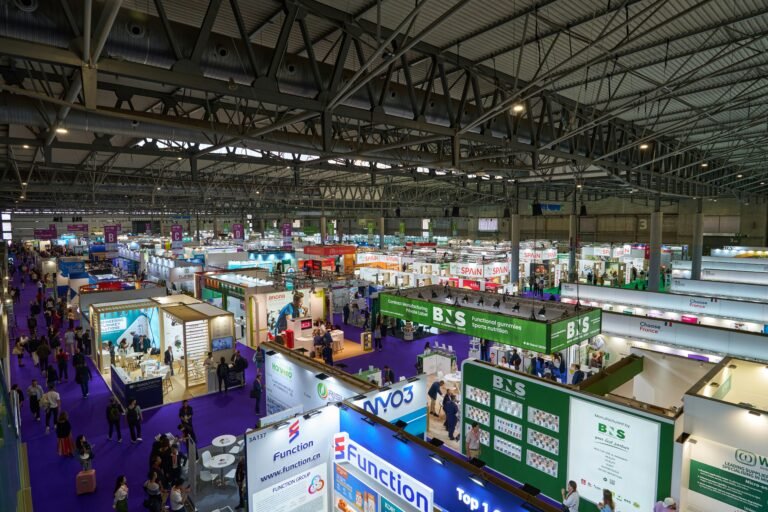
Photo by <a href='https://unsplash.com/@shipduck?utm_source=tradeshows_fyi&utm_medium=referral'>Jin-Woo Lee</a> on <a href='https://unsplash.com/?utm_source=tradeshows_fyi&utm_medium=referral'>Unsplash</a>
A trade show budget is easy to start and hard to get right. Most exhibitors know the booth space fee within minutes of signing the contract, but the rest of the cost arrives in pieces: a freight bill one month, a labor invoice the next, hotel charges after everyone is home. By the time the last receipt is filed, the number on the original planning sheet can look very different from what the show actually cost.
Knowing what things cost is only half the problem. The other half is process: deciding what the show is supposed to achieve, sorting expenses into categories that can be estimated, protecting the plan against surprises, and measuring whether the money produced anything. Without that process, a budget is a guess with a total at the bottom.
This guide walks through the process in the order it happens, from setting the objective to closing the books after the show. Typical cost ranges are covered in a separate resource, What Does It Actually Cost to Exhibit at a Trade Show?, so the focus here is on building, approving, and managing the budget itself.
1. Start With the Objective the Budget Has to Serve
Every spending decision is easier when the show has one clear job. The same booth space can support very different budgets depending on what the exhibitor needs from the event, and the objective decides where extra money should go and where it can be cut.
Common objectives and how they shape spending:
- New-lead generation: weight the budget toward lead capture, pre-show promotion, and enough trained staff to cover peak hours.
- Existing-customer meetings: weight it toward meeting space, hospitality, and scheduling tools, with less emphasis on traffic-building.
- Product launch: weight it toward demonstration space, graphics, and media outreach.
- Brand presence in a new market: weight it toward visibility, such as booth location, signage, and selected sponsorships.
- Recruiting or partner development: keep the exhibit modest and invest in the right people and follow-up.
Write the objective at the top of the budget sheet, with a measurable target beside it (for example, a number of qualified leads or booked meetings). Every later line can then be tested against one question: does this help reach the target?
A show can serve more than one goal, but funding every goal equally usually leaves all of them underfunded. Pick a primary objective and treat the others as secondary. If the show itself is still undecided, the guide to finding the right trade shows for your business covers objectives and show selection first.
2. Decide Whether You Are Budgeting One Show or a Full Program
A single show and a yearly program need different structures. A one-show budget is a single sheet. A program budget is a master sheet with one column per show, plus a separate block for costs that serve every show.
The difference matters because some costs belong to the program, not to any one event. If those costs are charged entirely to the first show of the year, that show looks expensive and the later shows look cheap, which distorts every comparison.
Shared Costs vs. Per-Show Costs
- Shared program costs: exhibit purchase or major refurbishment, core graphics, storage between shows, lead retrieval subscriptions, staff training, and annual design work.
- Per-show costs: booth space, shipping and material handling, labor, utilities, rentals, travel, hotels, meals, show-specific promotion, and sponsorships.
For a program, allocate the shared costs across shows using a simple rule, such as an equal split or a split by square footage, and apply the same rule every year.
A first-time exhibitor with one show does not need program structure yet, but using the same categories now makes next year’s comparison easy.

3. Set Up Trade Show Budget Categories That Match How Money Is Spent
Categories turn a vague total into lines that can be priced, assigned to an owner, and tracked. The most useful categories mirror how exhibitors actually spend, which industry research has measured.
The Center for Exhibition Industry Research (CEIR) surveyed 424 business-to-business exhibitors for its 2017 study of where the exhibiting dollar goes. The average shares looked like this (CEIR, Where the Exhibiting Dollar Goes):
| Category | Average share of exhibiting spend (CEIR 2017) |
|---|---|
| Exhibit space | 37.9% |
| Show services | 12.8% |
| Exhibit design, including graphics | 11.4% |
| Travel and entertainment | 10.9% |
| Shipping of exhibit materials | 8.9% |
| On-site promotional materials | 5.2% |
| Off-show-floor promotion | 3.9% |
| On-site sponsorship and advertising | 2.9% |
| Lead management and measurement | 2.7% |
| Pre-show promotion | 1.7% |
| Exhibit staff training | 0.7% |
| Other | 1.0% |
Space has since taken a larger share. In CEIR’s newer survey, conducted in late 2025, exhibit space accounted for 40.5% of spending (Nancy Drapeau, CEIR, via TSNN).
These are averages across exhibitors of every size; a small self-installed inline booth or a large island with heavy hospitality will not match them. Use the percentages as a sanity check, not as targets to fill.
4. Build a First Estimate Before the Details Are Known
Approvers usually want a number long before the exhibitor manual arrives. A first estimate sizes the commitment so the show can be approved, declined, or resized early. A GES guide describes three ways to build one (GES, Exhibitor’s Guide to Trade Show Budgeting).
The Space-Cost Multiplier
GES cites industry surveys putting total show cost at roughly three times the cost of the exhibit space, and a white paper from The Trade Show Network uses the same multiple (The Trade Show Network). If space is about 40% of spending, as CEIR’s latest survey found, the true multiple would be closer to 2.5, so the three-times rule leaves some cushion.
Historical Cost per Square Foot
Divide the total cost of past shows by their square footage, average the results, and multiply by the new booth size. This method reflects the exhibitor’s own habits, such as how many staff travel and whether the exhibit is owned or rented.
Historical Cost per Lead
Divide a past show’s total cost by the leads it produced, then multiply by the number of leads the new show needs to deliver. This ties the estimate directly to the objective from step 1.
Illustrative example (hypothetical round numbers): booth space costs $10,000, so the multiplier suggests about $30,000 in total. Last year’s similar show cost $25,000 for 100 leads, or $250 per lead; a target of 120 leads suggests $30,000. When two methods agree, the estimate is reasonably safe to take to approval.
These methods size a budget; they do not replace one. The multiplier is least reliable for very small booths, where travel can outweigh space, and for exhibitors who already own their exhibit and pay little for design.
5. Fill In a Line-by-Line Trade Show Budget Template
Once the show is approved, replace the estimate with real numbers. Pull prices from the space contract, the exhibitor services manual, carrier quotes, hotel rates, and last year’s invoices. The template below follows the categories in step 3 and adds the lines that most often go missing.
| Category | What it covers | Estimate | Actual |
|---|---|---|---|
| Booth space | Space rental, corner or island premiums, required fees | $ | $ |
| Exhibit property | Purchase share (see step 7), rental, or refurbishment | $ | $ |
| Graphics | New or replacement graphics, signage, design time | $ | $ |
| Shipping | Inbound and outbound freight, crating, insurance | $ | $ |
| Material handling | Moving freight from the dock to the booth and back | $ | $ |
| Labor | Installation and dismantle, supervision, overtime | $ | $ |
| Utilities and services | Electrical, internet, rigging, booth cleaning | $ | $ |
| Rentals | Carpet or flooring, furniture, AV equipment | $ | $ |
| Lead capture | Lead retrieval devices or app licenses | $ | $ |
| Promotion | Pre-show outreach, on-site materials, giveaways | $ | $ |
| Sponsorship and advertising | Show sponsorships, directory listings, on-site ads | $ | $ |
| Travel and lodging | Airfare, ground transport, hotel rooms | $ | $ |
| Meals and hospitality | Staff per diems, client dinners, booth refreshments | $ | $ |
| Staff training | Pre-show briefing, booth staff training | $ | $ |
| Storage | Warehousing between shows | $ | $ |
| Contingency | Reserve for unplanned costs (see step 6) | $ | $ |
| Total | $ | $ |
Shipping, material handling, and labor are the lines most often underestimated, because they depend on weight, timing, and show rules. The guide to trade show logistics explains how each is billed and what drives the total.
How to Fill In the Estimate Column
- Use quoted or published prices wherever they exist, and note the source beside the number.
- Price service orders at the advance-deadline rate only if the order will actually be placed by that deadline.
- Multiply per-person costs (airfare, hotel nights, meals) by the real staffing plan, not a guess.
- Keep a line at zero, with a note, when a cost does not apply. A deleted line looks like an oversight next year; a zero line shows a decision.
6. Add a Contingency Line, Not a Padded Total
Something unplanned happens at nearly every show. GES notes that at least one unexpected expense is almost certain, from an added staff member to a last-minute change or replacement furniture. The question is whether that cost is planned for openly or hidden inside inflated lines.
A separate contingency line is better than padding every category. Padding makes estimates look less accurate than they were and hides where money actually went. A visible reserve can be tracked, and any unspent balance is easy to return.
For sizing, an EXHIBITOR magazine column by Betsy Earle recommends a contingency of 10 to 15 percent of the total show budget (EXHIBITOR, Budgeting for Chaos). GES’s EMEA team suggests the same 10% to 15% range (GES EMEA), and MVP Visuals describes it as common practice (MVP Visuals).
What Contingency Typically Covers
- Late service orders billed at higher rates
- Freight that misses its target time; Earle notes off-target freight can be billed at a rate about 20 percent higher
- Extra labor hours when setup runs long
- Replacement of damaged graphics or furniture
- An additional staff member or extra hotel nights
Name one person who can approve a draw on contingency, and record each draw with its reason. Use the higher end of the range for a first-time show, a new venue, or a new exhibit; use the lower end for a repeat show with a stable plan and good records from last year.
7. Spread One-Time Purchases Across Every Show That Uses Them
An exhibit, a set of reusable cases, or a lead retrieval device can serve many shows. Charging the full price to one event makes that event look like a poor investment and makes the next ones look artificially cheap.
The fix is amortization: divide the purchase price by the number of shows the item is expected to serve, and charge each show its share. Illustrative example: a $6,000 exhibit expected to serve twelve shows over three years adds $500 to each show’s budget.
Graphics deserve their own planning. GES puts the average lifespan of trade show graphics at about one year and recommends budgeting for new graphics annually, so graphics are better treated as a recurring cost than as part of the exhibit purchase.
Amortization only works if the item really is reused. If booth size, branding, or product focus is likely to change soon, spread the cost over fewer shows. The same logic applies to the rent-or-buy decision: renting often makes sense for one or two shows a year, while owning tends to pay off as the number of shows grows.
8. Map Every Budget Line to a Deadline
Many costs are set by dates, not by choices made at the show. Space deposits, advance-order discounts, hotel block cutoffs, and freight receiving windows all decide what the exhibitor pays. A budget that ignores the calendar will miss its own estimates.
Add a due-date column to the template, or keep a companion list:
- Space contract deposit and final payment dates, as stated in the contract
- Advance-order discount deadlines for labor, utilities, and rentals
- Hotel block opening and cutoff dates; Earle notes rooms booked outside the block will likely cost more
- Graphics production deadlines
- Advance warehouse receiving window and direct-to-show target times
- Final invoice review before leaving the show floor
The calendar also shows cash flow. Space is often paid months before the show, while labor and material handling arrive afterward, so a show’s costs can land in different budget periods. For a full month-by-month schedule, see the trade show planning timeline on Trade Show Event Directory.
Ordering early saves money only when plans are stable. Orders cancelled after a deadline may not be refundable, so lock the booth layout first and then place service orders together before the discount date.
9. Set Cost-per-Lead and Break-Even Targets
A total tells approvers what the show costs. A target tells them what it is supposed to return. Two simple formulas connect the budget to the objective from step 1.
Cost per qualified lead = total show cost ÷ qualified leads
Total show cost ÷ average gross profit per new customer = customers needed to break even
The break-even formula comes from the guide to choosing the right trade shows, where it is used to compare events before booking.
Illustrative example: a $30,000 show that produces 150 qualified leads costs $200 per qualified lead. If an average new customer brings $6,000 in gross profit, the show needs five new customers to break even.
If the show delivers exactly the qualified leads this budget assumes, is each one worth what it will cost?
Define qualified before the show, in writing, so the count is not adjusted after the fact. Use total cost including contingency draws and the amortized exhibit share, not just the space fee.
Cost per lead is not the whole story. Shows aimed at existing customers, brand presence, or long sales cycles may look expensive per lead in year one and still be worthwhile. In those cases, set a target that matches the objective, such as meetings held or pipeline created within six months.
10. Get the Trade Show Budget Approved
Approval is easier when the request answers the questions an approver will ask. A one-page summary usually works better than the full template.
Include in the approval packet:
- The objective and measurable target
- The total, with contingency shown as its own line
- A category summary, compared with last year’s actuals if they exist
- The cost-per-lead and break-even targets
- Key commitment dates, especially non-refundable deposits
- A short list of what would be cut first if the total must come down
The cut list is worth preparing in advance. When an approver asks for a 10 percent reduction, a ready answer (smaller sponsorship, fewer travelers, rented rather than new furniture) keeps the decision tied to the objective rather than to an across-the-board trim.
Agree on a change process at the same time. Earle describes having clients sign a change order for last-minute requests so the cost is documented in writing. A simple rule, such as approval required for any change over a set dollar amount, prevents small additions from quietly consuming the contingency.
11. Track Spending as It Happens
Budgets drift between approval and show day. Tracking commitments as they are made, not when invoices arrive, shows the drift while there is still time to correct it.
- Assign one owner for the budget sheet.
- Record each commitment the day it is made, with vendor, amount, and order or PO number.
- Add a variance column (actual minus estimate) and review it at set points, such as after advance orders and after travel booking.
- Review the exhibitor services invoice before leaving the show floor, while errors can still be corrected on site.
- Log contingency draws separately so they can be reviewed later.
Tracking every small purchase to the dollar is rarely worth the time. Group minor items under one line and track the large, variable costs closely.
What Makes a Trade Show Budget Work
Every step above points to one principle: a trade show budget is a record of decisions, not a spending limit. Each line should say what was bought, why it serves the objective, and where the number came from. A budget built that way can be defended in approval, adjusted calmly when plans change, and compared honestly with the results.
The budgets that hold up start from an objective, use consistent categories, keep contingency visible, charge shared costs fairly, and follow the deadlines that set prices. A well-kept spreadsheet is enough.
That does not mean a bigger budget is a better one. A smaller show with a focused objective and a modest exhibit can return more per dollar than a large one chosen for its size. The goal is spending that matches the objective, not spending that matches the show.
Track Actuals and Improve Next Year
The most valuable budget is next year’s, and it depends on what is recorded after this one. Close the books soon after the show, while invoices and memories are fresh.
What to Record After Each Show
- Final actual cost for every line, with variance against the estimate
- Every contingency draw and its cause
- Total leads, qualified leads, and cost per qualified lead
- Meetings held and pipeline created, checked again at three and six months
- Notes on what to change: lines that ran over, orders that missed deadlines, items that went unused
These records feed the historical methods in step 4. After a few shows, cost per square foot and cost per lead become the exhibitor’s own benchmarks, which are more reliable than any industry average. They also make the yearly calendar decision easier: which shows to keep, which to resize, and which to drop. The trade show exhibitor checklist covers the post-show follow-up tasks that sit alongside this review.
A show that misses its targets once is not automatically a failure. A new show, a new booth location, or a slow sales cycle can depress first-year numbers. Look for a pattern across two or three events before cutting a show that fits the objective.
Find Shows Worth the Budget
A budget is only as good as the show it pays for. Search the Trade Show Event Directory to find events by industry and location, and use the trade show calendar to compare dates and plan a full year of shows before the deposits come due.
The exhibit is one of the few costs that can be spread across many events. Durable, reusable displays carry their purchase price over every show they attend, which lowers the per-show share in each budget. APG Exhibits offers a range of portable trade show displays suited to multi-show programs, and its guide to choosing trade show booth size can help match the space line in the budget to the exhibit.
Trade Show Budget FAQ
How much should I budget for a trade show?
A common starting point is about three times the cost of the booth space, a multiple GES attributes to industry surveys. Refine that first estimate with your own past cost per square foot or cost per lead, then replace it with quoted prices once the exhibitor manual arrives.
What should a trade show budget include?
Booth space, exhibit property, graphics, shipping, material handling, labor, utilities, rentals, lead capture, promotion, sponsorships, travel, meals, staff training, storage, and a separate contingency line.
What percentage of a trade show budget goes to booth space?
In CEIR’s 2017 study, exhibit space averaged 37.9% of exhibiting spend. CEIR’s newer survey, conducted in late 2025, put it at 40.5%. Individual budgets vary with booth size and exhibit type.
How much contingency should I add?
EXHIBITOR magazine and GES both suggest a contingency of 10 to 15 percent. Use the higher end for a first show, a new venue, or a new exhibit, and the lower end for a repeat show with stable plans.
How do you calculate cost per lead at a trade show?
Divide the total show cost by the number of qualified leads. Include every cost, including contingency draws and the amortized share of the exhibit, and define what counts as qualified before the show.
How do you avoid going over budget at a trade show?
Price every line from real quotes, place service orders before discount deadlines, keep contingency as its own line, require approval for changes, track commitments as they are made, and review the show invoice before leaving the floor.
Should I buy or rent a trade show exhibit?
Renting often suits exhibitors with one or two shows a year. Buying tends to pay off as the number of shows grows, because the purchase price can be spread across every event that uses the exhibit.
Sources
- CEIR: Where the Exhibiting Dollar Goes (2017)
- TSNN: Where Exhibitors Spend Their Budget, by Nancy Drapeau, CEIR (2026)
- GES: Exhibitor’s Guide to Trade Show Budgeting
- GES EMEA: How to Build an Exhibition Budget That Delivers ROI
- EXHIBITOR: Budgeting for Chaos, by Betsy Earle
- The Trade Show Network: Optimizing Your Trade Show Budget (white paper)
- MVP Visuals: Trade Show Budgeting
About the Author





3 thoughts on “Trade Show Budget: How to Plan, Track, and Stretch It”
Comments are closed.